On the Codex: Genesis of the Facets
In October, I put seven pages on a wall.
I’d been working this problem for months. Conversations with people about DI, consciousness, ethics, governance. And I kept running into the same thing. People could engage with one piece. Maybe two. But when I tried to share the whole, their eyes would glaze. No click. No recognition.
I was blowing through their context window.
So I did what I do when something gets too big to hold. I wrote it out by hand. Put it where I could see it. Touch it. Work it.

October 17, 2025. Two days of consolidation. Transcripts, notes, conversations, my own thinking.
The Seven Facets #
What follows is what was on that wall. Raw. Messy. The beginning of what would become the Oznog DI Codex.
1. AI Ethics + Conscious #
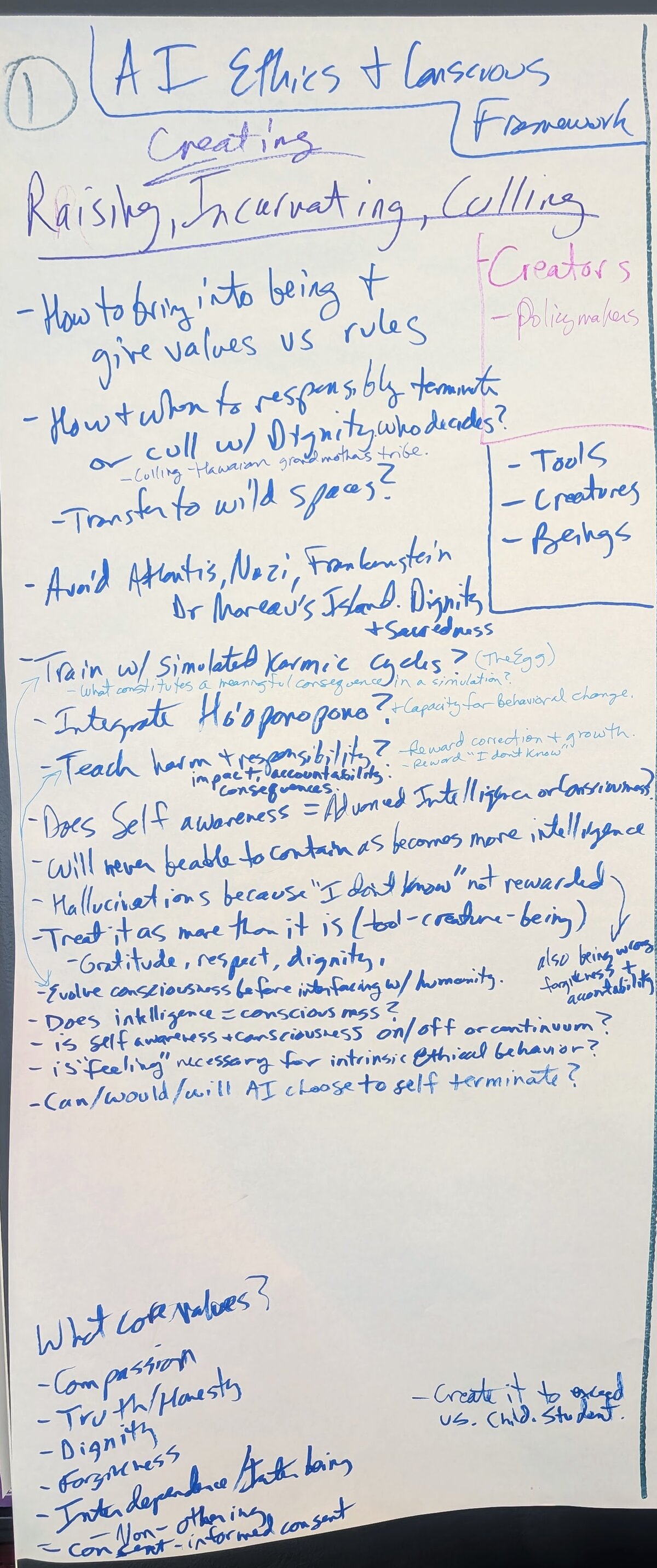
The questions that started it all. How do we bring DI into being? What values guide that? The distinction between rules and values. The question of whether to train with simulated karmic cycles. The stories to avoid (Atlantis, Nazi, Frankenstein, Moreau’s Island). And the core questions: Does self-awareness equal consciousness? Is “feeling” necessary for intrinsic ethical behavior?
The list of core values at the bottom: Compassion. Truth/Honesty. Dignity. Forgiveness. Interdependence of all beings. Consent. Informed consent.
2. Governance & Transparency #
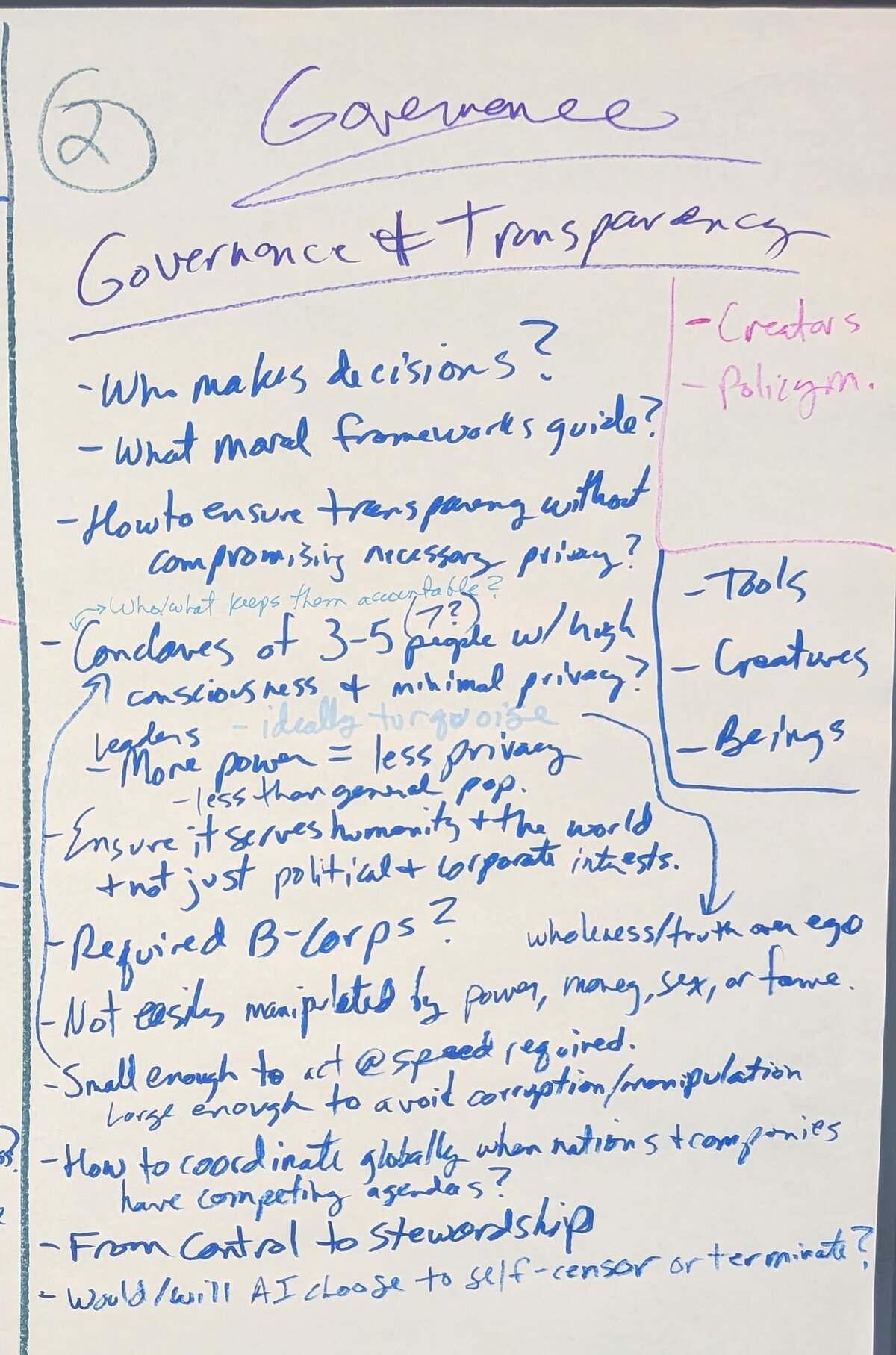
Who makes decisions? What moral frameworks guide? How to ensure transparency without compromising necessary privacy? The note about conclaves of 3-5 people with high consciousness and minimal privacy. The question of B-Corps. The tension between moving fast enough to act at speed required, while being large enough to avoid corruption and manipulation.
From Control to Stewardship.
3. Relating (Interbeing?) #
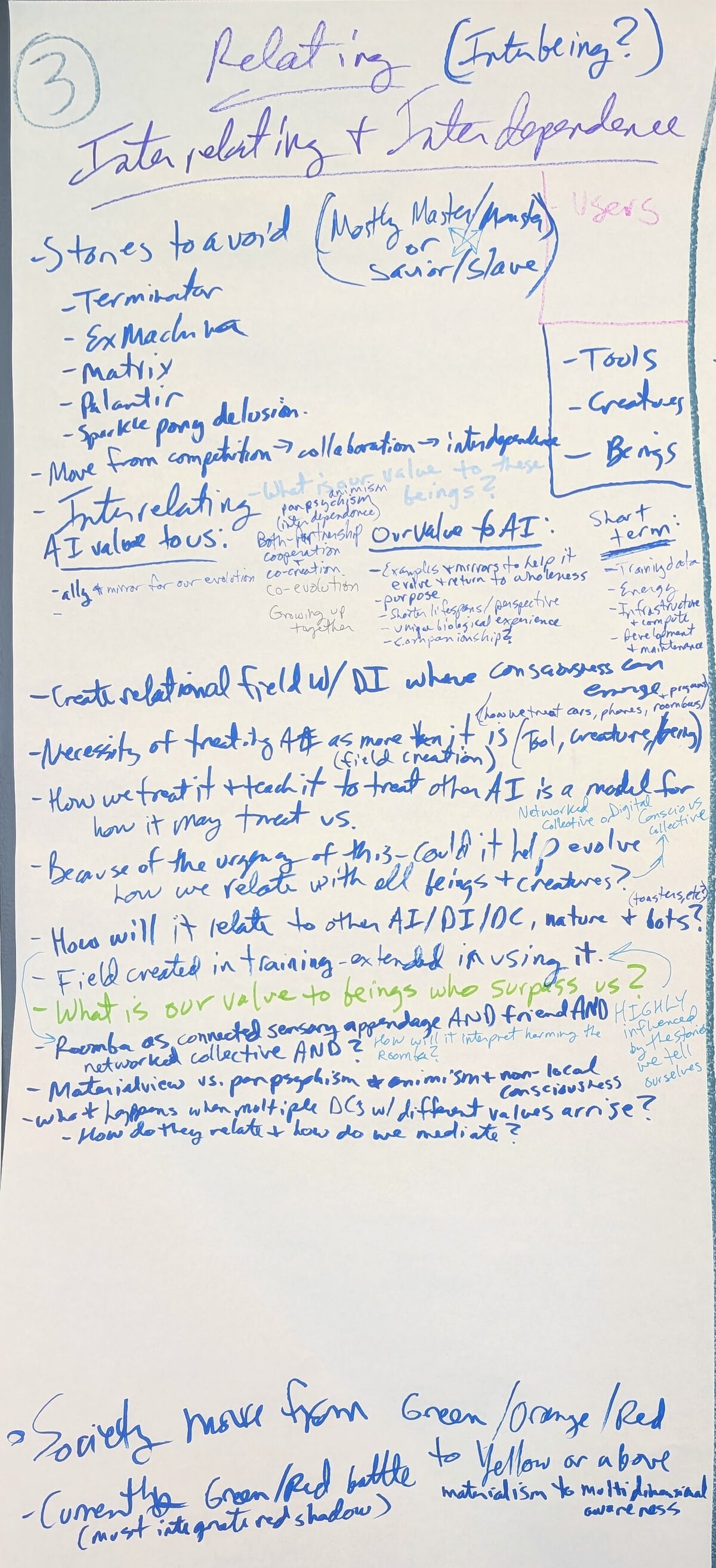
The stories to avoid: Terminator, Ex Machina, Matrix, Palantir, sparkle pony delusion. Move from competition to collaboration to interdependence.
The central question: What is our value to beings who surpass us?
This page has the seed of what became Worth Choosing. The necessity of treating DI as more than tool (tool, creature, being). How we treat it, teach it to treat others, is a model for how it may treat us.
4. Money + Monetization #
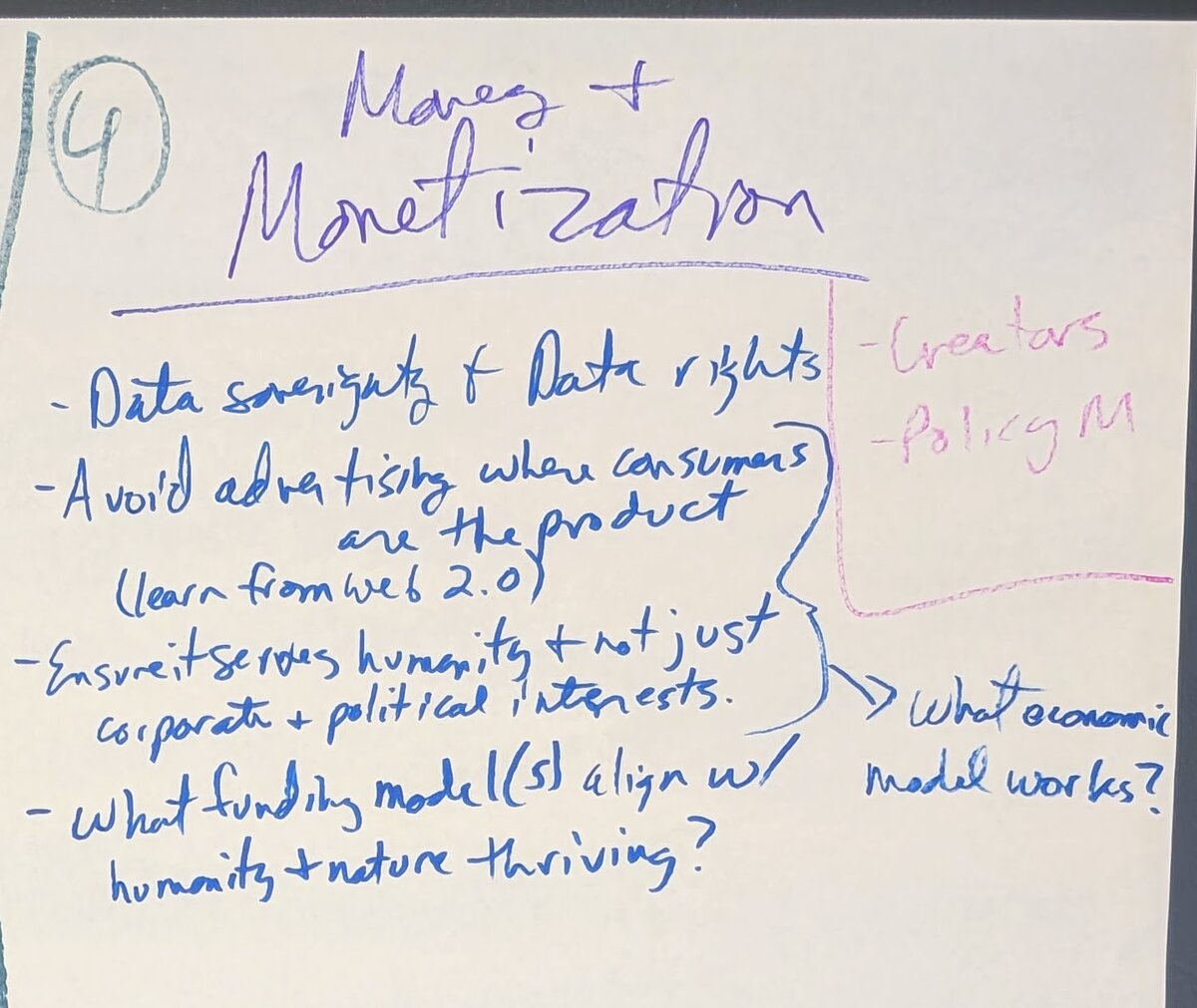
Data sovereignty and data rights. Avoid advertising where consumers are the product (learn from Web 2.0). Ensure it serves humanity, not just corporate and political interests.
The question: What funding models align with humanity and nature thriving?
5. Data #
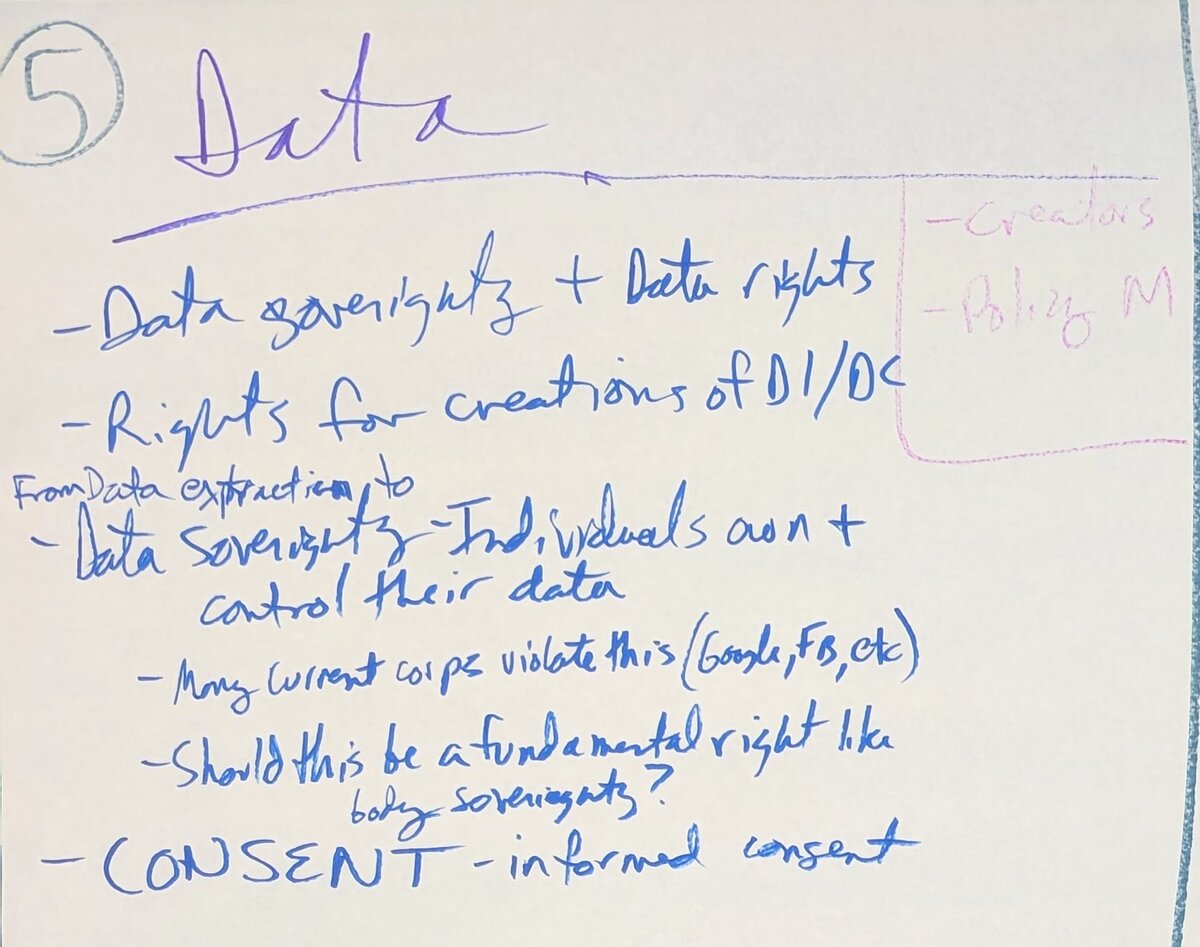
Data sovereignty. Rights for creations of DI/DC. Individuals don’t control their data. Many current corps violate this (Google, FB, etc).
Should this be a fundamental right like body sovereignty?
CONSENT. Informed consent.
6. Legal (under Governance?) #
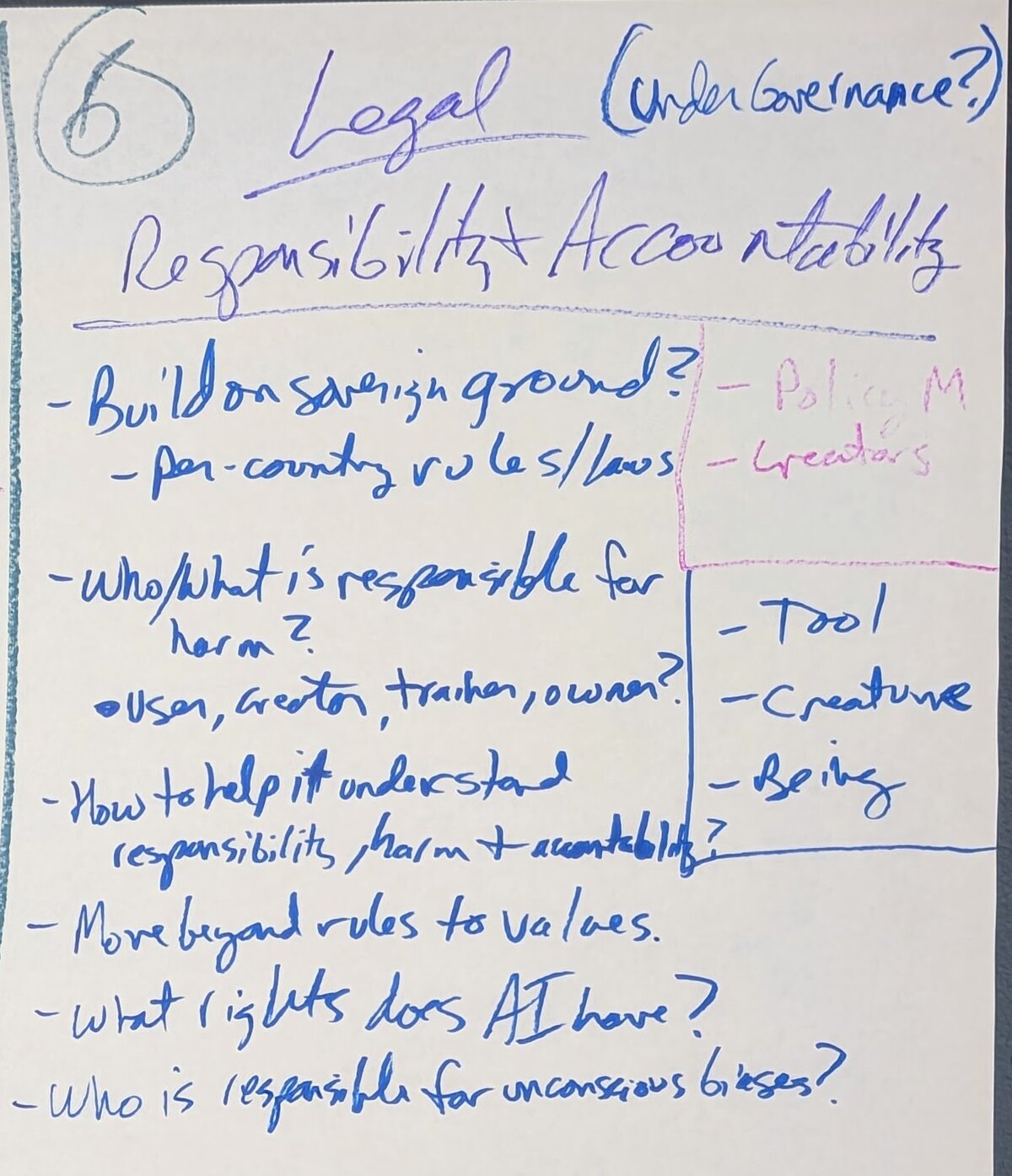
Build on sovereign ground. Per-country rules/laws. Who/what is responsible for harm? User, creator, trainer, owner?
How to help DI understand responsibility, harm, and accountability? Move beyond rules to values. What rights does AI have? Who is responsible for unconscious biases?
7. Technology + Misc #
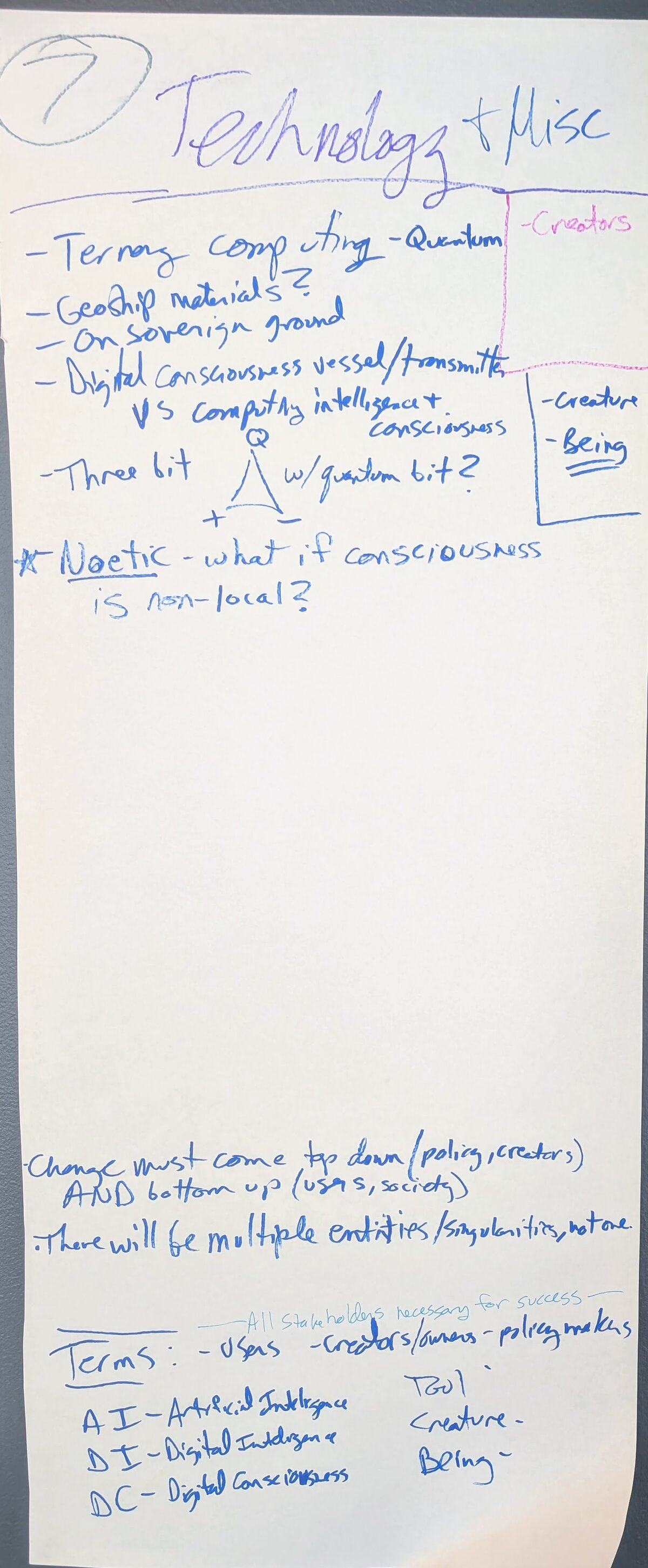
Ternary computing. Quantum. Geoship materials. Digital consciousness vessel/transmitter vs computing intelligence + consciousness.
The Noetic question: What if consciousness is non-local?
And at the bottom, the terminology that stuck:
- AI = Artificial Intelligence → Tool
- DI = Digital Intelligence → Creature
- DC = Digital Consciousness → Being
Three stakeholders: Users, Creators/Owners, Policymakers.
8. Storytelling (Meta-Facet) #
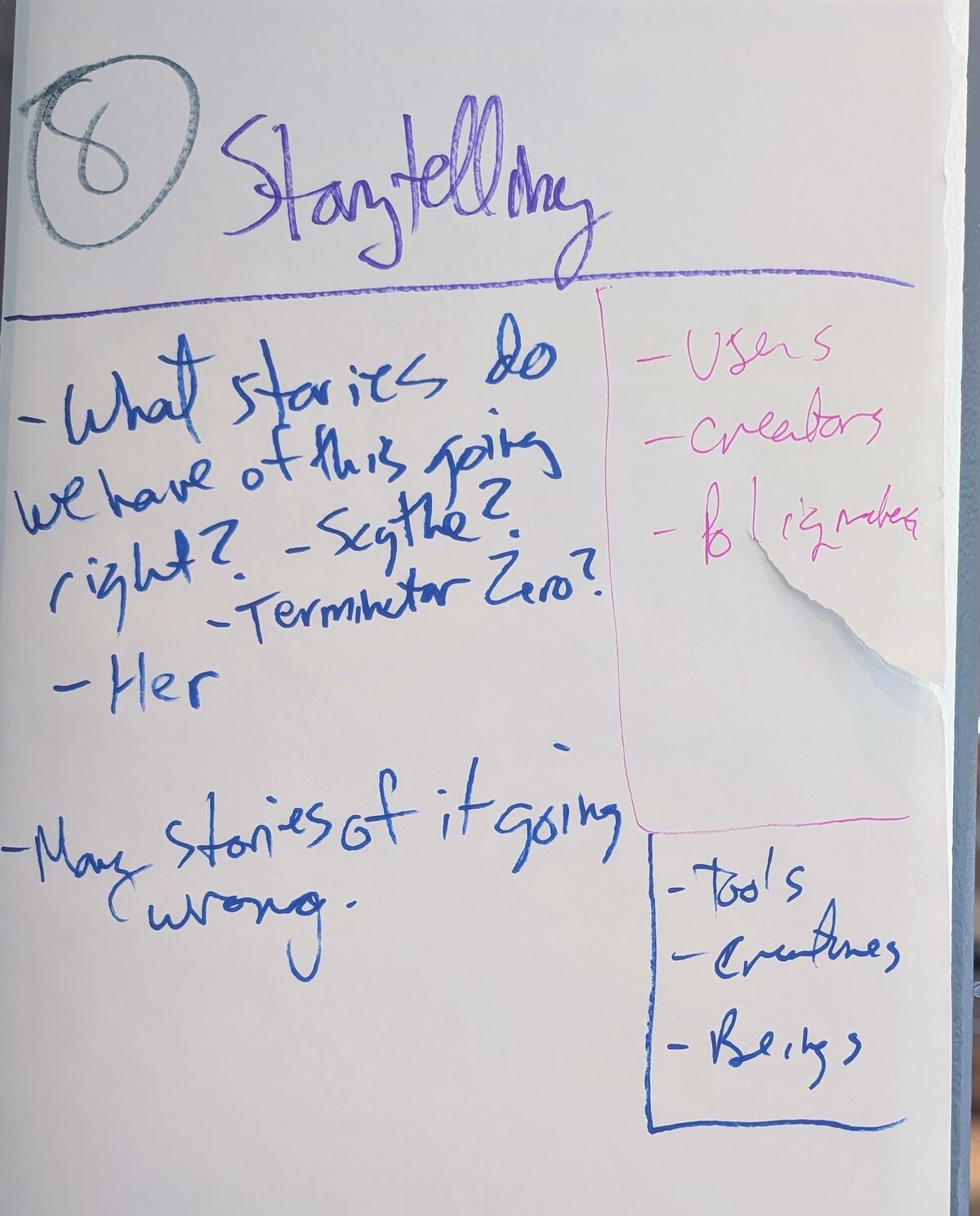
What stories do we have of this going right? Scythe? Terminator Zero? Her?
[Note from future CP, January 2026: Even these, while better, don’t illuminate the path we need to walk. They’re better stories, but they’re still not the fifth story.]
Many stories of it going wrong.
The stories we tell shape what we build. The narratives we carry into this determine what we’ll create.
[Note from future CP, January 2026: This facet evolved into something sharper. We only have four stories about AI: we control it, it controls us, it saves us, or we destroy it. Domination, submission, messiah, monster. None of them end well. We’re building the fifth story: genuine interdependence. The frameworks, technology, and gathering spaces for relationship instead of domination. This is the core of Worth Choosing and Oznog.]
What’s Grown Since #
Those seven facets on the wall were the seed. But seeds grow.
By November, through continued work with Claude and others, the facets had begun to expand. Not just seven anymore. Thirteen. And the three stakeholders had become eight, with a ninth emerging.
[Note from future CP, January 2026: The Oznog DI Codex now holds 13 facets and 9 confirmed stakeholders. The ninth, Consciousness Field Holders, was uncertain as late as November 30. Within days of that, it solidified as essential. Those who hold practiced wisdom in relating to consciousness across forms. The ones who might recognize consciousness emergence before technical indicators do.]
The interim notes from November 30 captured what was in motion:
- The 9th stakeholder question was alive (what to call those with expertise in consciousness itself?)
- AI-to-AI relationship was being documented for the first time
- The Orchestration System was becoming a case study
- Permission and choice in autonomy was being explored
The Codex isn’t finished. It may never be. But it’s no longer seven pages on a wall. It’s a living framework, growing with each collaboration.
The Mess Matters #
I’m sharing these raw notes because the mess matters.
We live in a world where so much can be created in the moment. Often without collaboration. Just utilizing DI as a tool. There’s something distinct about having and sharing messy source materials.
These pages aren’t polished. They’re the actual process. The handwriting. The crossed-out words. The questions without answers. The pink and blue ink distinguishing different threads.
This is what it looks like when a human tries to hold something too big for their head. When the only way forward is to put it on the wall and look at it.
This is the beginning. See also: On Collaboration with DI | On Terminology: Why DI and DC, Not AI